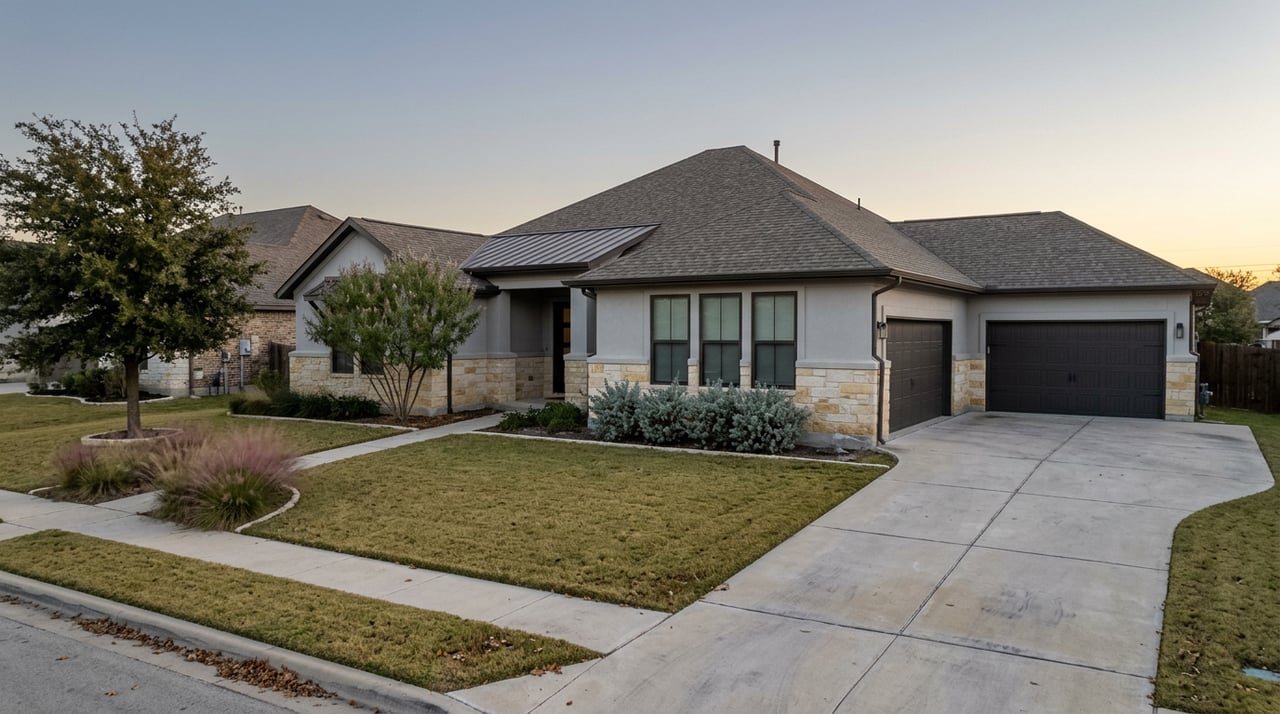
Dyess AFB BAH Increase 2026: What the 24% Jump Means for Housing
September 24, 2026
September 24, 2026
Why would the Pentagon approve one of its rarest mid-year housing allowance corrections for a single Air Force base in West Texas?
That question arises from a Defense Travel Management Office notice about the Abilene/Dyess AFB housing area this spring. In May 2026, DoD temporarily raised Basic Allowance for Housing rates for the Abilene/Dyess AFB military housing area, a correction that landed somewhere between 18 percent and 28 percent depending on rank and dependency status, averaging around 24 percent. The stated reason was brief: housing market changes.
Most people read that and feel relief. A bigger check lands in your account, and the natural read is that the system finally caught up to what rent actually costs in Abilene. That read is not wrong, but it is incomplete in a way that matters if you are trying to decide whether to rent, buy, or wait right now.
BAH rates are supposed to be boring. Once a year, DoD surveys rental markets around each installation and resets rates for the following January. That annual rhythm is deliberate. It gives families predictability and gives DoD a manageable process across hundreds of housing markets nationwide.
A mid-cycle correction breaks that rhythm on purpose, and DoD doesn't do it often. The last comparable round of unscheduled increases came in 2021, when pandemic-era rent spikes hit dozens of markets across the country at once. This year's Abilene correction looks different because it is not a national wave. It is one Texas base and, separately, Okinawa, each responding to a local pressure specific to that installation.
So the real question isn't "why did BAH go up." It's "what happened in Abilene that was big enough, and fast enough, to force DoD to skip the queue instead of waiting for the normal 2027 rate-setting cycle." The annual survey model assumes rental markets drift. Something at Dyess didn't drift. It jumped.
In September, the Hardin-Simmons University event called "The Future Is Now" Summit included a discussion of Dyess's growth. As Big Country Homepage reported, Maj. Gen. John Nichols, vice president of the Military Affairs Council, told the room that Dyess is entering what he called a generational growth period.
"The Air Force has decided to move the ones from South Dakota and put them all here now in Abilene, Texas at Dyess. We're going to have 44 total aircraft inventory of B-1s in the next 3 years-ish. These are all rough estimates. And with that, we're going to get about 3,000 additional airmen and family members."
That is not a forecast. It is a decision already in motion. B-1 squadrons are consolidating from Ellsworth AFB in South Dakota into Dyess, and on top of that, Dyess is one of only three U.S. installations selected to host the incoming B-21 Raider, alongside Ellsworth and Whiteman AFB in Missouri. Roughly $1.6 billion in infrastructure work, spanning 24 separate military construction projects, is already under contract to prepare for the B-21's arrival, including a new fuels lab and refueler yard that broke ground in December 2025 with a target completion by fall 2027. Base officials have also said the move sets up the possible return of the nuclear mission to Dyess for the first time since the 1990s.
Nichols was direct about the housing math this creates: military housing only accepts federal BAH, which is often lower than what landlords are actually charging in Abilene right now. Add roughly 3,000 additional airmen and family members to a rental market that hadn't priced in that growth yet, and you get exactly the kind of gap that forces an out-of-cycle correction instead of waiting twelve months for the normal survey to catch up.
That context helps explain the "housing market changes" description. The correction isn't proof the market has finished adjusting. It's proof the adjustment started before the growth even fully lands.
DoD's published 2026 standard rates, before the May correction, already give you a sense of scale for a few common pay grades with dependents:
| Pay Grade (with dependents) | Standard 2026 BAH | May 2026 Correction |
|---|---|---|
| E-5 | $1,554/month | +18% to +28% |
| E-6 | $2,214/month | +18% to +28% |
| O-3 | $2,253/month | +18% to +28% |
| O-4 | $2,343/month | +18% to +28% |
Run that E-5 figure through the correction band and the allowance lands somewhere between roughly $1,834 and $1,989 a month, depending on exactly where DoD set the final rate for that grade. The DoD fact sheet also builds in a safety net worth knowing about: if Abilene's rental market cools before the standard 2027 rates are set, affected service members keep the higher, temporarily corrected rate rather than losing ground. It functions as a floor, not a one-year bonus.
If you're PCSing to Dyess, the move here is simple. Don't estimate your own number from a table like this one. Pull your exact figure from the official BAH calculator before you sign a lease or make an offer, since the final rate depends on the precise date your orders take effect.
If you've searched Abilene home prices this year, you've probably noticed the numbers don't line up. Depending on which data source and which week you check, Abilene's typical home value in 2026 has been reported anywhere from around $168,000 to $250,000. Some of that gap is simple methodology. A median sale price for one calendar month is a different measurement than a rolling home value estimate, and the two will diverge, sometimes by tens of thousands of dollars, without either one being wrong.
But part of the gap is the same growth pressure showing up on the buy side. One measurement showed Abilene homes selling in a median of 39 days late last year, down from 70 days the year before, alongside a median sale price around $250,000, up 5.3 percent year over year. Faster absorption paired with a rising median is a classic sign that the mix of homes selling is shifting, not that every home in Abilene suddenly repriced. A wave of incoming officers and senior NCOs with larger BAH bands, arriving alongside the existing local buyer pool, can pull a median upward even while plenty of homes in other price bands sell at the pace they always have.
The practical takeaway is not to trust a single headline number this year, in either direction. Ask which price band and which part of town a specific figure is actually describing before you use it to plan.
Housing at Dyess runs on two separate tracks, and the growth wave hits them differently. On-base privatized housing is managed by Balfour Beatty Communities, with more than 650 homes across seven on-base neighborhoods. That inventory is fixed. It doesn't expand just because about 3,000 additional airmen and family members are on the way over the next three years, which means waitlists for on-base housing are likely to get longer, not shorter, as the B-1 consolidation and B-21 beddown progress. Off-base, Hunt Military Communities operates Quail Hollow, and the broader Abilene rental and for-sale market absorbs whatever on-base housing can't.
If you're weighing rent versus buy for a Dyess assignment landing in the next year or two, the honest planning assumption is more competition ahead for both rental units and homes for sale, not less. That doesn't mean panic. Abilene's home prices remain well below the national median even with recent movement, and Texas's no state income tax structure still stretches every housing dollar further than it would at most other installations. It does mean that "wait and see if the market settles" is a riskier bet here than it would be at a base that isn't mid-consolidation.
Do I need to apply for the temporary increase, or does it happen automatically? It's automatic. Anyone assigned to the Abilene/Dyess housing area and eligible for BAH receives the corrected rate without filing anything individually.
Will my rate drop back down in 2027 if rents level off? DoD structured this as a floor. If the standard 2027 rate comes in lower than the temporary rate you're on now, you keep the higher figure rather than taking a pay cut.
Does this change anything if I live in on-base privatized housing? Not directly in your pocket. Families in privatized on-base housing typically assign their full BAH to the housing operator rather than banking the difference, so the correction mainly reshapes the math for anyone renting or buying off-base.
If you have orders to Dyess and you're trying to figure out what your actual number buys in a specific Abilene neighborhood right now, that's exactly the kind of question we spend our days answering. Roberta Borlovan and the Tiny or Grand Realty Group team hold the MRP designation and work with Homes for Heroes, and we track the base's growth pipeline closely because it changes the advice we give month to month. Reach out before you sign a lease or write an offer, and we'll walk through what your BAH actually supports in today's market, not last year's.
This article is general information, not legal, tax or financial advice. Consult a qualified professional about your situation.
Stay up to date on the latest real estate trends.
Explore our website to discover the latest property listings, insightful market reports, and valuable resources to empower your real estate decisions. Whether you’re a first-time homebuyer, seasoned investor, or looking to sell your property, Tiny or Grand Realty Group is here to make your real estate journey a seamless and rewarding experience. Thank you for considering Tiny or Grand Realty Group as your trusted real estate partner. Let’s turn your dreams into addresses!